
This is the print version of this page. All content is copyright Indezine.com 2000-2026.
Learn how to create custom shaped Picture placeholders in PowerPoint 2011 for Mac. You can achieve some awesome results.
Author: Geetesh Bajaj
Product/Version: PowerPoint 2011 for Mac
OS: Mac OS X
Rather than using simple rectangle placeholders for your pictures, you can use various other shapes that appear almost silhouette-like. Yes, this is possible within PowerPoint! In fact, look at Figure 1, below. These custom picture placeholders were created within PowerPoint, and we used nothing that's not a part of PowerPoint. Of course this process is a little detailed, but not difficult!

Figure 1: Custom picture placeholders
We have already covered how PowerPoint 2011 for Mac enables you to insert placeholders within a Slide Layout. Picture placeholders are among the various placeholder types you can insert. You can do more with the Picture placeholders, such as creating custom placeholders. You can also make them to look like the one, shown in Figure 1, above. We used PowerPoint's Combine Shapes commands. These commands are not available by default within the Ribbon, but you can right-click shapes, and select the Grouping option to access them as explained in our Combine Shapes Commands in PowerPoint 2011 for Mac. Follow these steps to learn how to customize your Picture placeholders:
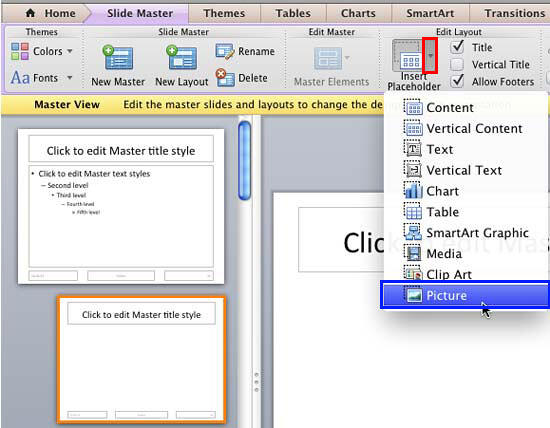
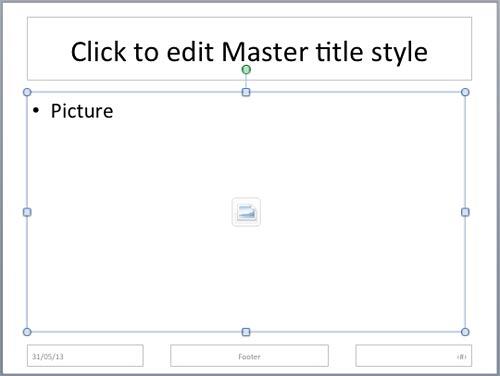
Want to resize or reposition your new Picture placeholder precisely? Explore our Shapes tutorials that explain how you can do these tasks with Shapes. Picture placeholders are Shapes too! What's important though is that you do nothing more than resizing and repositioning at this time with your picture placeholder, as the Combine Shape options we explore next won't work if the placeholder is further formatted.
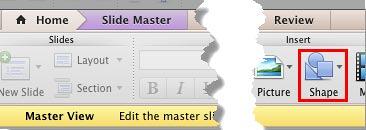
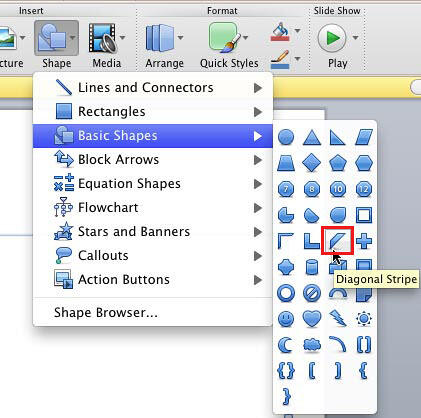
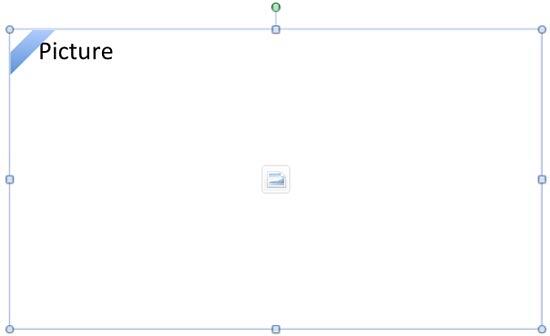
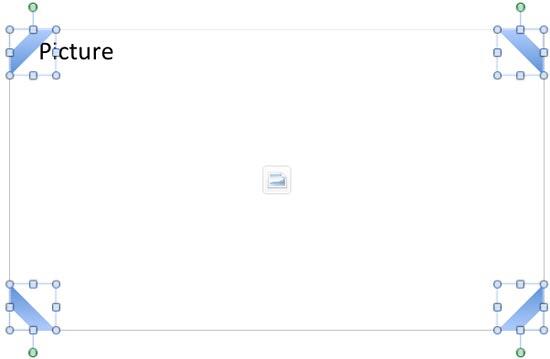
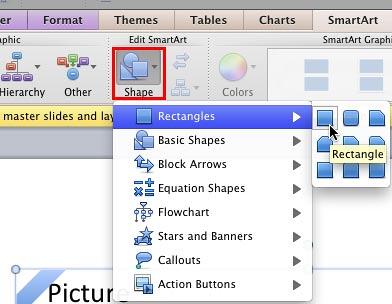
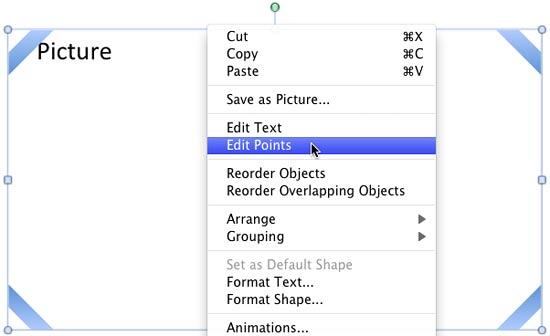
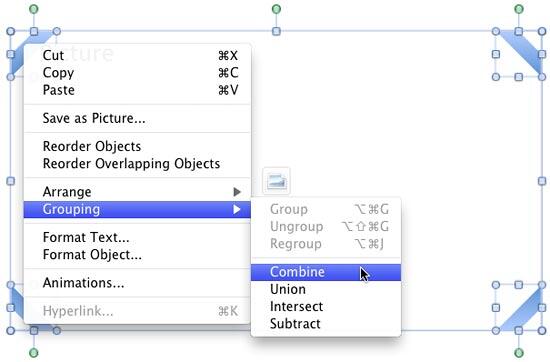
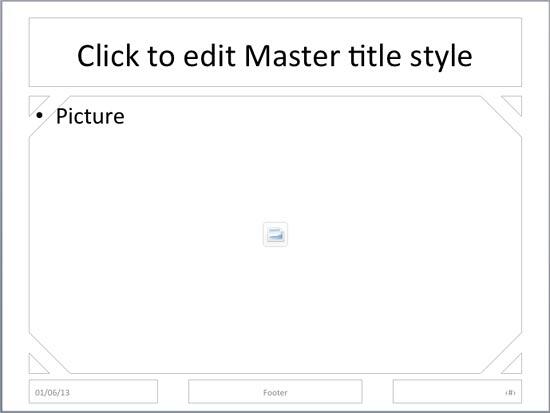
Not getting the result shown in Figure 11 above? Do you instead see a full solid color picture placeholder, as shown in Figure 12, below? This may occur depending on whichever slide object you selected first. If you select any of the corner shapes first, and then the picture placeholder you'll get the results, shown in Figure 12, below. So, always opt for selecting the picture placeholder first and then the corner shapes to achieve results shown in Figure 11 above.
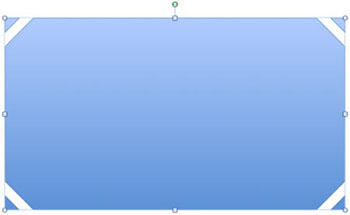
Figure 12: Picture placeholder with solid color
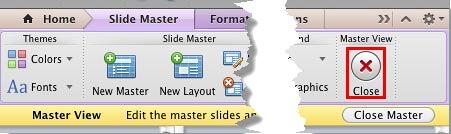
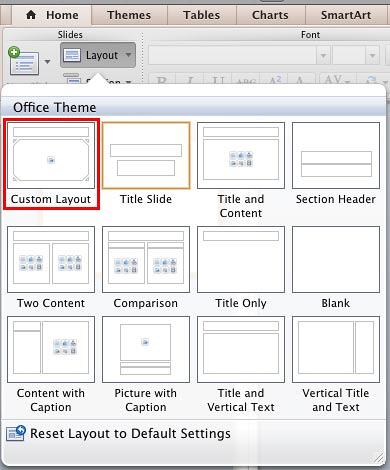
The new layouts you create are saved as part of the presentation, and are not available in any other presentations you create. Other than adding placeholders to your new slide layouts, you can also change their slide backgrounds.
Also, you can change the name of your new layouts from Custom Layout to something more descriptive. This is explained in our Duplicate, Rename, and Edit Slide Layouts in PowerPoint 2011 for Mac tutorial.
See Also:
Slide Master and Slide Layouts: Create Custom Shaped Picture Placeholders in PowerPoint (Index Page)
Create Custom Shaped Picture Placeholders in PowerPoint 2016 for WindowsYou May Also Like: How to Pitch and Win People Round | Food - K PowerPoint Templates




Microsoft and the Office logo are trademarks or registered trademarks of Microsoft Corporation in the United States and/or other countries.
