
This is the print version of this page. All content is copyright Indezine.com 2000-2026.
Read an exclusive book excerpt from HBR Guide to Persuasive Presentations.
Author: Nancy Duarte
Product/Version: PowerPoint
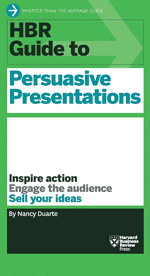 This excerpt is from Nancy Duarte's HBR Guide to Persuasive Presentations. This is a book that's easy to carry along with you, and easy to read too. All content is presented as bite-sized chapters of a few pages, and there's so much presentation wisdom to be gained from reading and implementing the content from this book.
Reprinted by permission of Harvard Business Review Press. Excerpted from HBR Guide to Persuasive Presentations. Copyright 2012 Harvard Business School Publishing Corporation. All rights reserved.
When you walk into a room as a presenter, it’s easy to feel as if you’re in a position of power: You’re up front, perhaps even elevated on a stage, and people came to hear you speak. In reality, though, you’re not the star of the show. The audience is.
Why? The people you’re addressing will determine whether your idea spreads or dies, simply by embracing or rejecting it. You need them more than they need you. Since they have that control, it’s crucial to be humble in your approach. Use their desires and goals as a filter for everything you present.
Presenters tend to be self-focused. They have a lot to say, they want to say it well, and they have little time to prepare. These pressures make them forget what’s important to the audience. A self-focused presenter might just describe a new initiative and explain what needs to get done – outlining how to do it, when to do it, and the budget required. Then maybe, if the audience is lucky, he’ll have a slide at the very end about “why it matters”. This format screams, “I pay you to do this, so just do it!” The presenter is so consumed by the mission that he forgets to say why people would want or need to be involved.
Spend a moment in your audience’s shoes. Walk people through why the initiative matters to them and to the organization, what internal and external factors are driving it, and why their support will make it successful. Yes, get through the nitty-gritty details, but set up the valuable role they’ll play in the scenario rather than dictate a laundry list of to-do’s.
Though presentations and audiences vary, one important fact remains constant: The people in your audience came to see what you can do for them, not what they must do for you. So look at the audience as the “hero” of your idea – and yourself as the mentor who helps people see themselves in that role so they’ll want to get behind your idea and propel it forward.
Think of Yoda – a classic example of a wise, humble mentor. In the Star Wars movies, he gives the hero, Luke Skywalker, a special gift (a deeper understanding of the “Force”), trains him to use a magical tool (the lightsaber), and helps him in his fight against the Empire.
Like Yoda and other mentors in mythology, presenters should:
So if you’re gearing up to launch a new service offering, for example, give your team a clear roadmap (tool) and a promise to bring in consultants for training and support (gift) – and describe how these will help everyone rise to the challenge ahead.
See also: HBR Guide to Persuasive Presentations: Conversation with Nancy Duarte
You May Also Like: Take Lessons From Digital UX to Improve Your Public Speaking | Bhutan Flags and Maps PowerPoint Templates


Microsoft and the Office logo are trademarks or registered trademarks of Microsoft Corporation in the United States and/or other countries.
