This is the print version of this page. All content is copyright Indezine.com 2000-2025.
In this interview, Nancy discusses how the book evolved, how she decided what makes it to the book, and more.
Product/Version: PowerPoint
 Nancy Duarte has been a Principal of Duarte
Design since 1990. Her firm is in the heart of the Silicon Valley and the client list is loaded with Fortune 500 companies. Her passion
for business communications that are clear, meaningful and attractive has opened doors for her in a business world full of cluttered and
complex visual communications. In this interview, Nancy discusses her much awaited book
slide:ology that was released this month.
Nancy Duarte has been a Principal of Duarte
Design since 1990. Her firm is in the heart of the Silicon Valley and the client list is loaded with Fortune 500 companies. Her passion
for business communications that are clear, meaningful and attractive has opened doors for her in a business world full of cluttered and
complex visual communications. In this interview, Nancy discusses her much awaited book
slide:ology that was released this month.
Geetesh: I'm sure there's an interesting story in how you did this book -- tell us about how slide:ology evolved?
 Nancy: Believe it or not, I wrote all
the copy and assembled the pictures in PowerPoint -- I knew early on that I wanted each page to be similar to a slide. One key message per spread.
Nancy: Believe it or not, I wrote all
the copy and assembled the pictures in PowerPoint -- I knew early on that I wanted each page to be similar to a slide. One key message per spread.
After assembling the first pass, I pasted them in the hallway at my house. I studied them every day and wrote notes about each point I wanted to make. Then, I spent 5 days holed away in a hotel to finalize all the structure. Once that was nailed, I wrote like crazy and collected samples of our work to explain each point.
My Art Director established the look for the book and then my designer applied the look to all my PowerPoint content. Even though the final book looks simple and clean, the development process was messy.
Geetesh: When I saw slide:ology for the first time, I could see your stamp everywhere in the book. In a way, this book symbolizes everything you do in the world of slides. How difficult or easy was it to choose what to includes?
Nancy: I tried to include anything useful to presenters that applied to slides only. Cutting out content around message and delivery was tough but this book was going to focus solely on slides and hopefully the next book will cover content and delivery.
I also had to cut out some of my favorite stories. They didn't really fit into the structure. After being in this business for over 20 years, we have some pretty funny stories. I guess they'll be blog posts.
Geetesh: There are a lot of readers who would want to know more about Nancy, the person. If you had to put something about yourself in a small paragraph, what would it be?
Nancy: In many ways I could be a study in contrasts. I'm a passionate revolutionary and yet a tender soul. Many times I struggle with feelings of guilt because I get so fired up about a cause or objective that sometimes I run over people accidently which I feel enormous guilt about.
OK, that was WAY too deep. I guess I could have simply said that I love to hike on the weekends and watch Law & Order reruns..
Geetesh: What's your thought about stories? While it is a new mantra of combating bad presentations, there are still tons of slides being created in the corporate sphere that use the typical bullets and background approach. Is a happy equilibrium possible? Are we moving to some middle path?
Nancy: "Story" is such a broad topic. There are meta-stories, micro-stories, story structures and storytelling. Stories can break the dullard spell that slides have. They also create a more human connection with the presenter. But if the presenter hasn't worked at creating a strong visual story, audiences can still become frustrated when the presenter uses their slides as a teleprompter. Including stories is a good first step but many presenters aren't able to take the time required to deliver a presentation without slides-as-crutch.
Geetesh: If there was just one thing that slide:ology could achieve in helping people create better presentations, what do you want that to be?
Nancy: The book will change your perspective on what a world-class slide is. When you begin your next presentation, you'll create it from a new vantage point and you'll "see" things differently.
Geetesh: Do share some trivia with us about an unconventional experience you might have had that was related to slide:ology -- something that's never been told before?
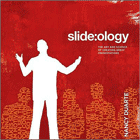
Nancy: One of my employees ordered the book on Amazon and promptly returned it because he thought it was damaged. The texture on the cover is painterly so some white shows through and he thought it was scraped. Amazon graciously sent him a second book and when he received it, he realized that it too had the identical "scrape" and it was an intentional design element. Needless to say, if he works AT Duarte and thought that, we figure that others would too. So we've decided to remove the white texture on the next print run to avoid confusion.


Microsoft and the Office logo are trademarks or registered trademarks of Microsoft Corporation in the United States and/or other countries.